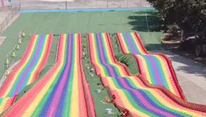
Key Factors Affecting the Quotation for Rainbow Slides
Rainbow slides are highly popular non-motorized amusement attractions in scenic spots and leisure parks. Since there is no fixed industry standard for pricing, the price range can vary significantly. The final quotation is primarily determined by several aspects, including slide specifications, material quality and craftsmanship, site conditions, customization options, and supporting services.
Slide Specifications
Slide dimensions are the foundational factor in pricing. The industry generally calculates costs based on the slide's area or length. The length, width, and number of lanes directly determine the total material consumption. Standard straight slides are more cost-effective and suitable for most regular sites. However, extended models or large-scale multi-lane combinations will increase overall construction costs. Purchasing and installing multiple lanes together can help distribute the unit cost. Additionally, special designs like curves or undulating waves require more complex design and construction processes, as well as more materials, resulting in higher quotes compared to standard straight slides.
Material Quality & Craftsmanship
The quality of materials and manufacturing processes are major reasons for price variations. Rainbow slide boards on the market differ significantly in thickness, wear resistance, and UV protection. Premium boards that meet thickness standards, offer sun and aging resistance, and resist color fading naturally come with higher procurement costs. Furthermore, the specifications of the steel frame structure underneath the slide and the reinforcement processes also affect the overall cost. Steel frames that are thickened and treated with anti-rust and wind-resistant coatings enhance equipment safety and lifespan, which correspondingly increases the construction cost.
Site Conditions
The actual conditions of the construction site can generate additional costs. If the existing terrain has a suitable slope and the ground is flat and regular, the construction process will be simpler and the overall investment relatively lower. However, if the site is flat and lacks the necessary slope, or if the terrain is complex with debris and obstacles, extra civil engineering work will be required. Tasks such as earthmoving to create slopes, ground hardening, and steel frame elevation will significantly increase material and labor expenses. Moreover, if the site is in a remote location, logistics and on-site installation labor costs will also rise.
Customization & Supporting Services
Customized design and supporting equipment/services also impact the final price. Creating exclusive themed packaging or non-standard designs tailored to a specific site will incur design fees. The overall quotation will also fluctuate based on the inclusion of supporting equipment—such as safety nets, buffer zones, sliding tubes, and automatic tube return systems—as well as upgraded warranty and after-sales maintenance services.