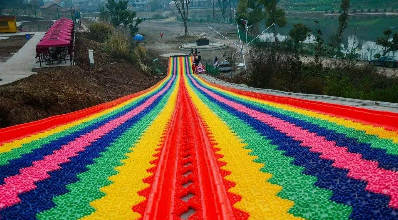
How to Assess Rainbow Slide Quality by Slider Weight
The weight (grammage) of rainbow slide panels is a key indicator of surface quality. It directly reflects the thickness of the board, the purity of the material, and the structural stability, making it an intuitive way to distinguish between premium sliders and inferior products. Under the same material and manufacturing process, a heavier slider generally indicates better overall quality and operational stability.
1. Advantages of High-Weight Sliders
Sliders with sufficient weight feature full material filling and uniform board thickness, resulting in greater overall toughness. When exposed to long-term outdoor sunlight and temperature fluctuations, they are less prone to deformation, bending, or edge warping, ensuring a flatter surface and more consistent sliding smoothness. Additionally, high-weight sliders offer excellent wear resistance. They can withstand long-term, high-frequency sliding friction without showing signs of surface wear, whitening, or powder shedding, which significantly extends their service life.
2. Risks of Low-Weight Sliders
Low-weight sliders often suffer from reduced material usage and thinner boards. Some manufacturers cut costs by blending in recycled materials, making the sliders overly soft and lacking in toughness. After a period of use, they are prone to deformation and loosening. This not only negatively impacts the visitor's sliding experience but also increases safety hazards such as widened splicing gaps, jamming, and slipping, leading to higher frequencies of maintenance and replacement.
3. Comprehensive Evaluation
It is important to note that weight is not the sole criterion. It must be evaluated in combination with the raw material quality and manufacturing process. Only sliders made from 100% virgin materials with standard weight can effectively balance toughness, wear resistance, and anti-aging capabilities. Properly controlling the slider weight parameter is key to ensuring the long-term safe and stable operation of the rainbow slide and reducing future maintenance costs.