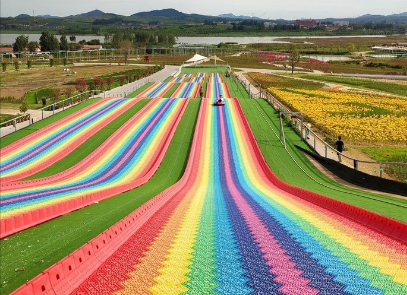
How to Handle Wear and Tear on Rainbow Slide Panels?
Rainbow slide panels are subject to long-term friction from snow tubes, as well as exposure to sun and rain, which gradually leads to surface wear. To ensure sliding safety and visitor experience, corresponding measures must be taken based on the severity of the wear.
1. Minor Wear (Surface Scratches & Dullness)
Minor wear manifests only as surface scratches and a loss of gloss, with no significant thinning of the panel thickness, nor any fraying or cracking. In this case, there is no need to replace the panels. Simply maintain regular cleaning to remove sand and debris, reducing friction from hard particles. You can also apply a specialized protective coating to enhance surface smoothness and slow down further wear.
2. Moderate Wear (Thinning & Fine Cracks)
When moderate wear occurs, parts of the panel become thinner, showing signs of fraying or fine cracks. It is essential to mark the damaged areas and increase the frequency of inspections. The worn spots can be sanded and repaired to smooth out the rough surface and prevent cracks from expanding. After repair, test the sliding effect to ensure snow tubes do not get stuck, preventing the repaired area from scratching visitors.
3. Severe Wear (Structural Damage)
If panels show significant thinning across large areas, through-cracks, or damaged/warped edges, this constitutes severe wear. Repair is no longer sufficient to guarantee safety, and the entire panel must be replaced promptly. When replacing, pay attention to the splicing of new and old panels, control the joint gaps, and perform proper sealing to ensure the overall flatness of the slide.
4. Preventive Maintenance
Prevention is key to reducing panel wear during daily operations. Before opening, clear any gravel from the slide and regulate visitor behavior by prohibiting hard objects on the slide. Conduct regular comprehensive inspections of panel conditions and establish a wear log to detect and address issues early. This approach minimizes safety hazards and extends the overall service life of the slide.